
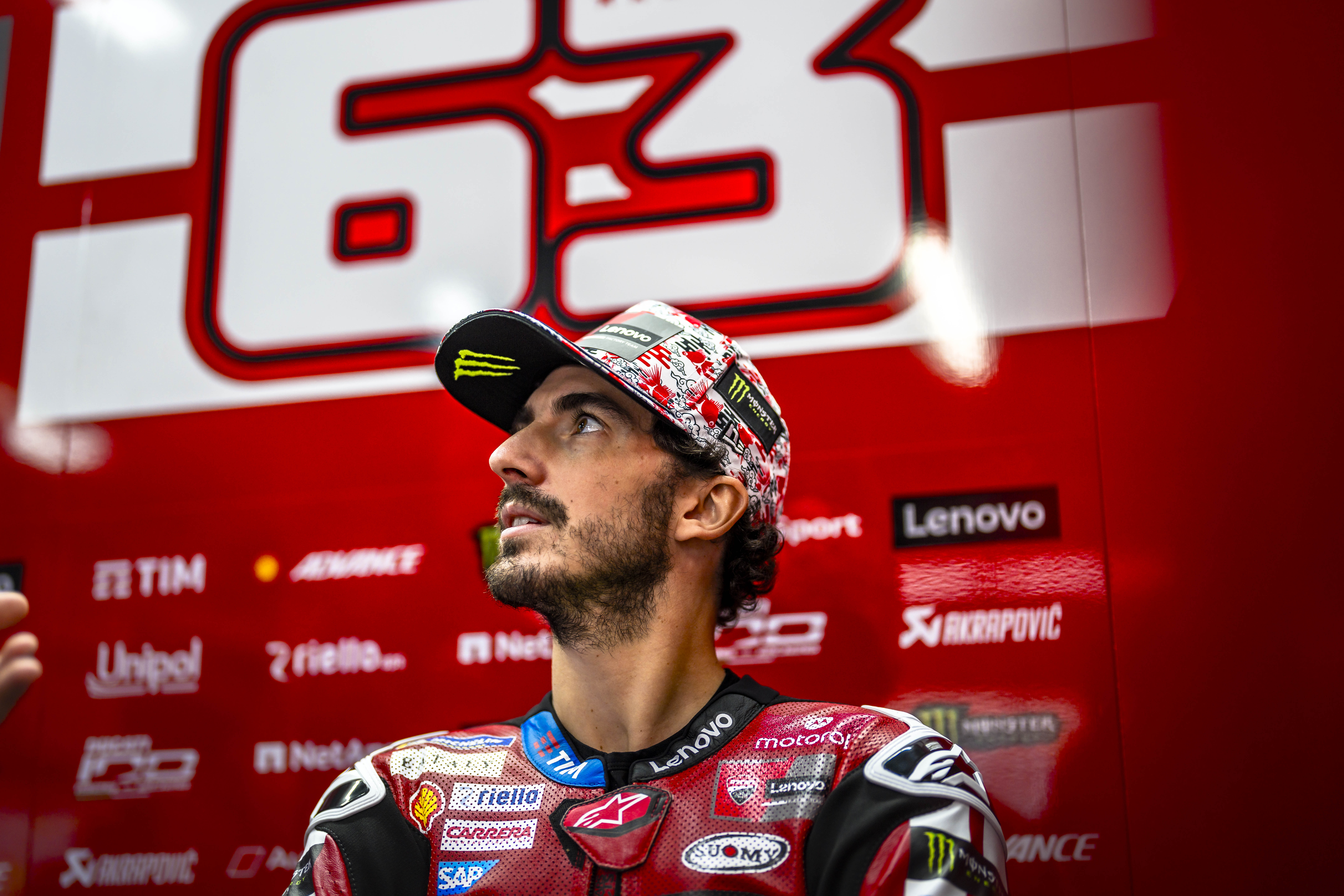
Francesco Bagnaia finished eighth in the Japanese Grand Prix at Motegi, a result that the Ducati champion made the most of despite a difficult race, capitalising on a number of crashes and penalties that affected several rivals at the front of the field. But beyond the final standings, the talk of the post-race discussion was a technical decision that proved decisive: the use of the hard compound on the rear tyre.
The Piedmontese rider explained to the media present at the Japanese circuit how this decision came about, highlighting an issue that had sparked debate within the Ducati paddock. According to Bagnaia himself, he was practically the only one within the Borgo Panigale team to push strongly for the hard tyre to be fitted ahead of the race – a choice that ultimately proved successful in terms of performance and consistency in race pace.
One significant detail that emerged from his comments is that this tyre compound had not actually been tested during the weekend’s free practice sessions. This circumstance makes Bagnaia’s decision all the more significant, as he was forced to rely on his instincts and feel for the bike rather than on concrete data gathered on track during the race weekend.
The choice of hard tyres, particularly on a circuit like Motegi where tyre overheating can become a decisive factor over the course of the race, enabled the Turin-born rider to maintain a consistent performance whilst other riders, who had probably opted for softer compounds, suffered a drop in performance in the final stages of the race. This, combined with crashes and penalties imposed on other competitors, helped Bagnaia to climb up the order and still finish in the points, albeit some way off the positions the two-time world champion is accustomed to occupying.
This incident prompts a broader reflection on teamwork within the Ducati team and on the differing views that factory riders may have regarding tyre choices – a topic that is always a sensitive one in the MotoGP paddock, where every hundredth of a second can make the difference between a good race and one to forget. The fact that Bagnaia had to personally insist on a choice that ultimately proved to be the right one also speaks volumes about a rider who, despite a season that has not been easy in terms of results, continues to trust his instincts on the track.
It now remains to be seen whether this experience in Japan will prove to be a turning point for the upcoming rounds on the calendar, with Bagnaia looking to capitalise on what he learnt at Motegi to return to consistently challenging for the top positions in the remaining races of the season.
Written by Fabio Averna
Article produced by the AiSportNews newsroom with the support of artificial intelligence tools.